Historically, hot oil systems deployed in the polyester sector have struggled to safely ensure the complete combustion of hazardous industrial waste gases and liquids. Furthermore, maintaining pollution-free, ultra-low nitrogen (NOx) emissions while co-burning these highly variable waste streams alongside natural gas has been a persistent industry obstacle.
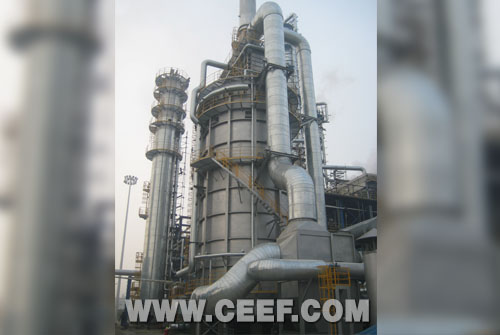
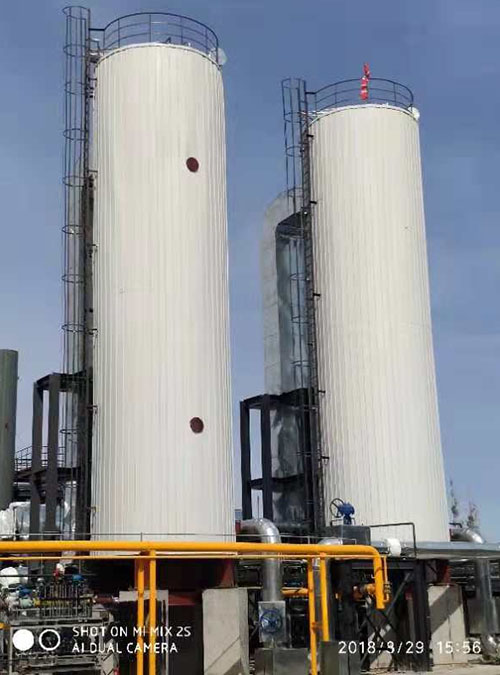
In a major technological breakthrough, CEEF engineered two 12 million kcal/h thermal fluid heaters specifically designed to resolve these environmental and operational limitations.
Mastering Complex Waste Co-Combustion
These advanced thermal oil heaters utilize a highly complex fuel mix. While operating primarily on natural gas, the heaters are uniquely configured to safely co-burn heavy manufacturing byproducts, including esterification water, tail gas, and waste liquid containing approximately 50% tetrahydrofuran (THF).
The robust furnace design allows each thermal fluid heater to process over one ton of waste liquid and two tons of waste gas per hour without compromising operational safety or heat transfer efficiency.
Verified Ultra-Low NOx Emissions
This specialized installation has yielded outstanding environmental results that set a new benchmark for polyester manufacturing. Local online monitoring confirms that during the demanding co-combustion process, the hot oil systems maintain highly stable operation with oxygen levels tightly controlled at 2-3%.
Most notably, NOx emissions are restricted to an ultra-low 60-70 mg/Nm³, remaining well below the stringent 80 mg/Nm³ threshold required for hot air-assisted combustion. This technological advancement provides a guaranteed pathway for sustainable emissions in the polyester industry. Concurrently, to further expand these efficient production capabilities, CEEF’s latest YWQ-850Q gas-fired thermal fluid heater is currently undergoing installation at the client’s facility.