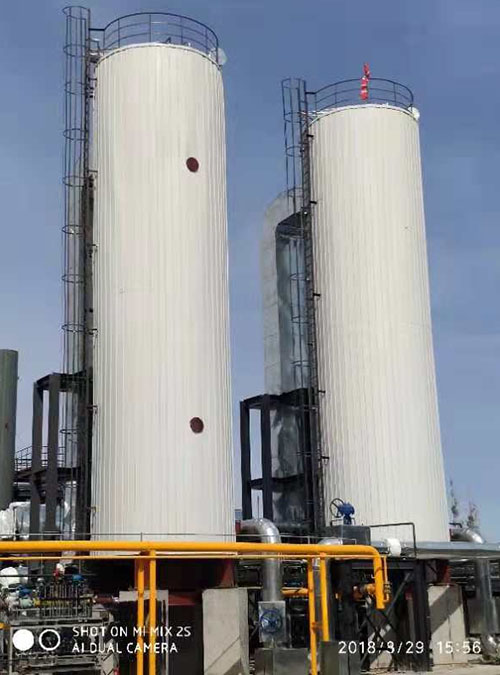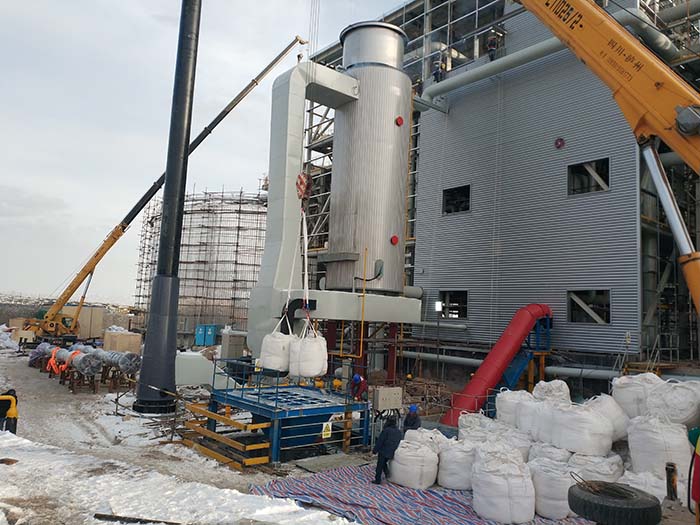
At 14:19 on April 17, 2019, the Qinghai Delingha 50 MW Solar Thermal Power Station, jointly invested by Zhejiang Zhongkong Solar Technology Co., Ltd. and Zhejiang Zhongguang New Energy Technology Co., Ltd., achieved full-load operation. It is China’s first commercial 50 MW concentrated solar power (CSP) plant, and CEEF supplied its core thermal heating and anti-freezing systems.
Operating results
According to the owner’s operating records, every major indicator exceeded its design value:
| Indicator | Result |
|---|---|
| Heat absorber outlet molten salt temperature | up to 566 °C |
| Main steam pressure | 13.3 MPa |
| Maximum steam turbine generator output | 50.65 MW |
The concentrating, heat-absorption, heat-storage and power-generation subsystems all operated stably under load.
CEEF’s role: keeping molten salt liquid
Nitrate molten salt freezes at roughly 220–240 °C. In a CSP plant that makes freeze protection a hard requirement. The heat-transfer circuit has to be preheated before the first fill, held above the freezing point overnight and during outages, and recovered safely if a section ever cools down.
CEEF’s contribution on this project was the thermal heating and intelligent anti-freezing equipment that makes this possible. It builds on CEEF’s molten salt heater experience, which includes Asia’s largest molten salt heaters (12,000,000 kcal/h), delivered for an alumina pipeline digestion project with fully automated control.
Why this project matters
Delingha marked CEEF’s expansion from industrial thermal fluid heating into renewable energy. Molten salt systems operate far above the range of organic thermal oils, and they need the same disciplines CEEF has applied since 1978: rigorous thermal design, certified pressure-part fabrication and 100% non-destructive testing.
For a deeper look at the engineering behind this, read our technical note Molten Salt vs. Thermal Oil: Choosing a Heat Transfer Fluid Above 300 °C.